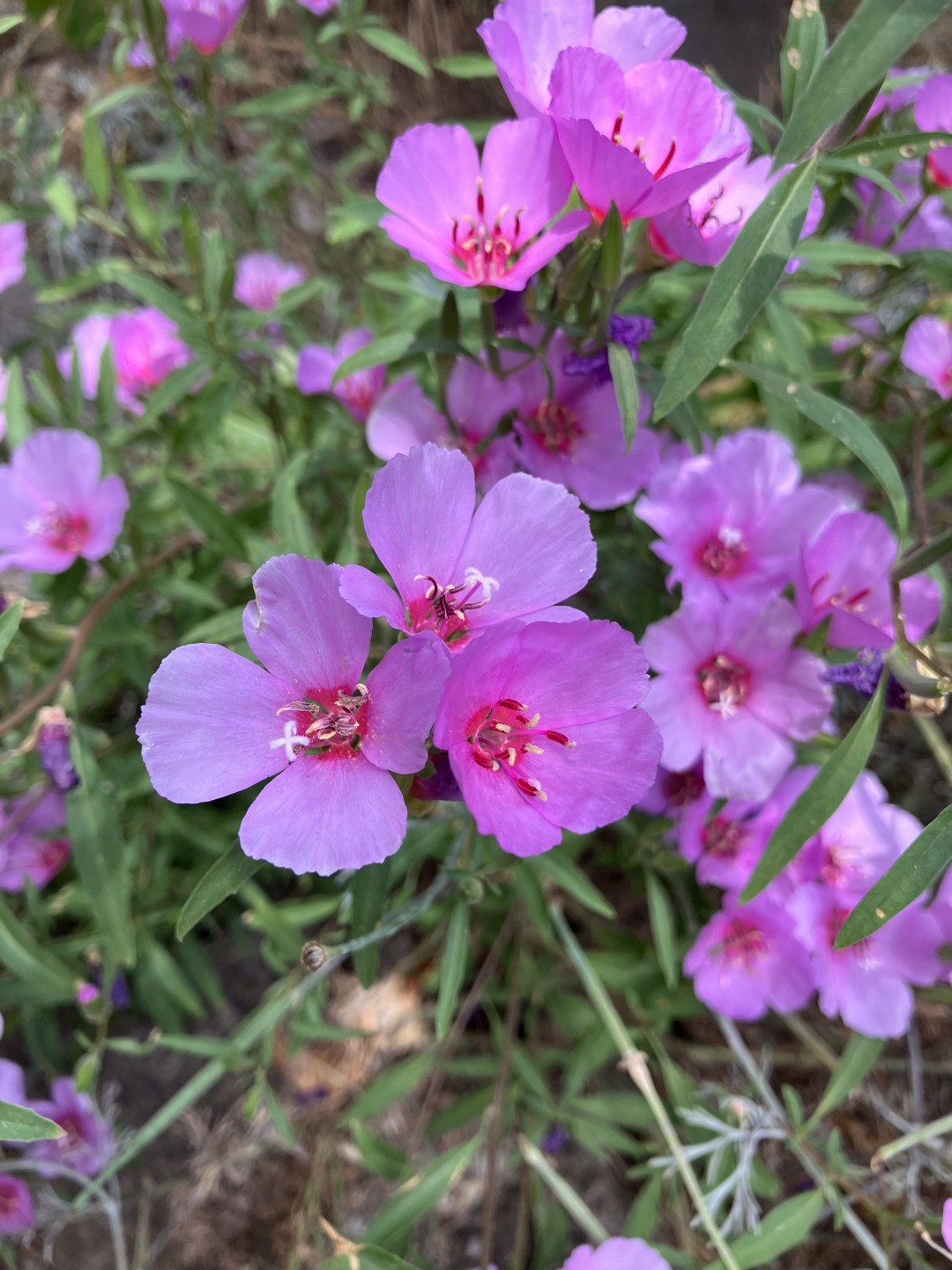
Alongside the six-week Dirt Girls session focused on monarch conservation, I spent spring propagating Clarkia spp. plants to share with the community. Commonly referred to as ‘farewell to spring,’ clarkia blooms fade with the transition to the summer season. I began propagating clarkia seeds with students in January and continued until I had 100+ plants. Some were planted in the Monarch Waystation last month (see Collaborating to Support Monarch Butterflies). The rest were distributed to neighbors, friends, collaborators, and shoppers at the Napa Farmers Market before the solstice.


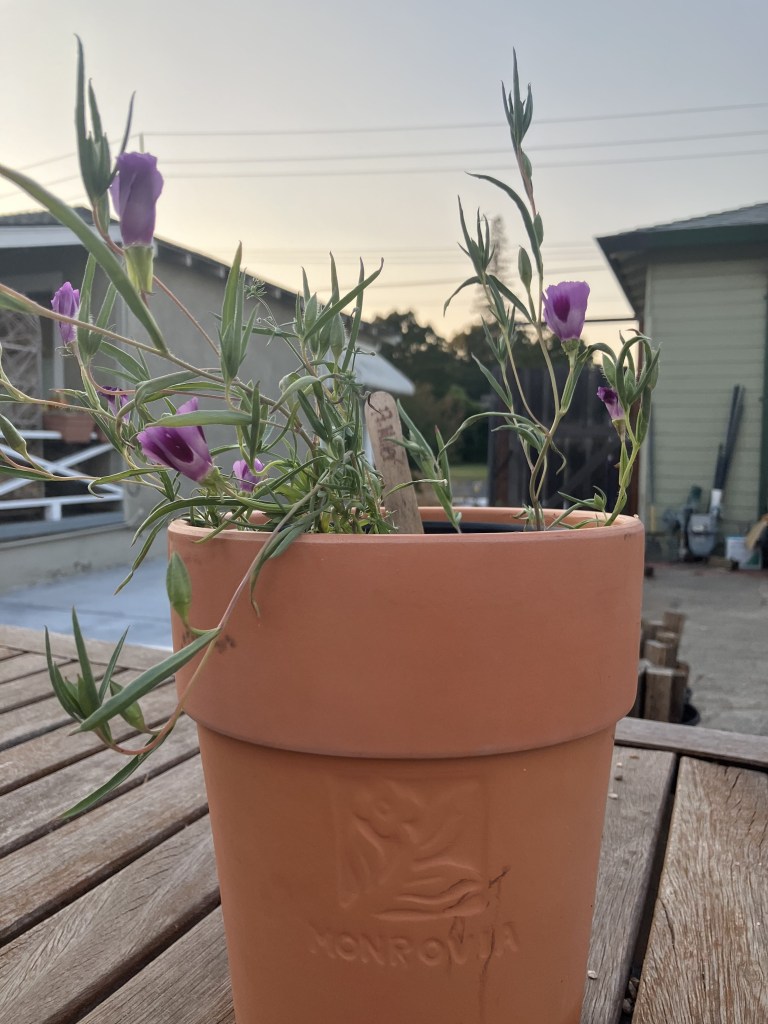
Although I was familiar with other varieties of the evening primrose family (Onagraceae), I first read about native Clarkias in an issue of Flora, a publication of the California Native Plant Society (CNPS). From Clarkia to Yorkia (Winter 2022, p. 32) described a nursery renaming effort intended to raise awareness of the complexity of power and privilege in stewardship and scientific naming. The nursery proposed changing the common name of Clarkia to Yorkia. Clarkia is an honorific for William Clark (of the Lewis and Clark Expedition). York was the enslaved Black naturalist on the Lewis & Clark expedition who never had any plants named in his honor.
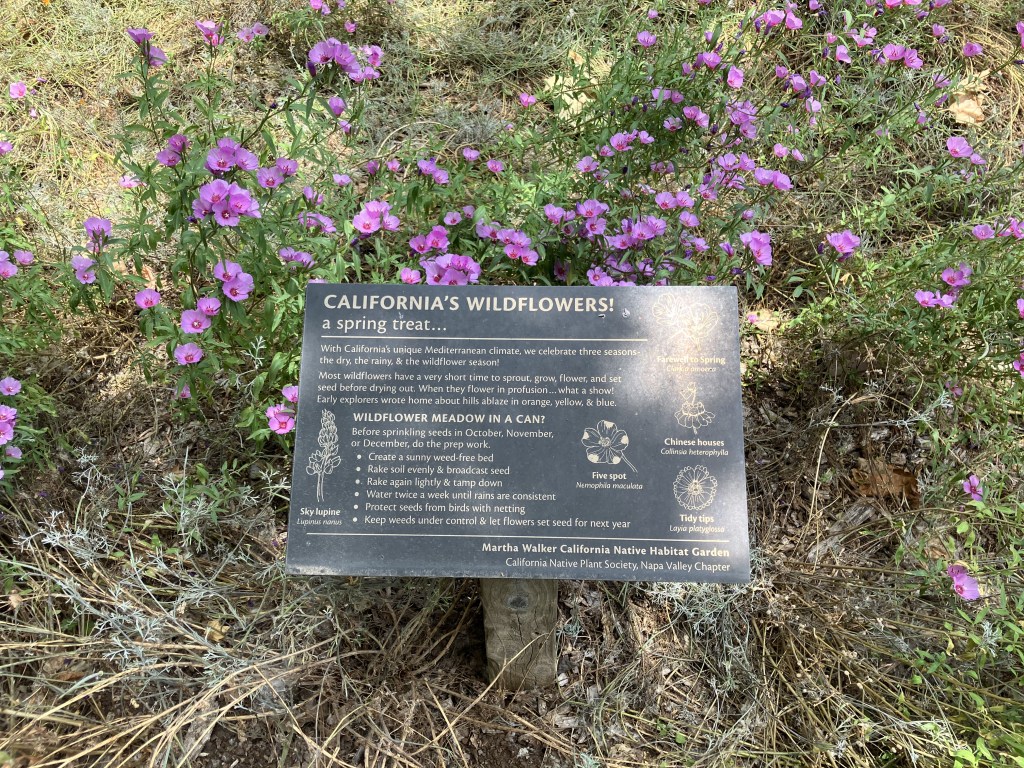
I looked into the presence of Clarkia in Napa County by searching the Calflora database. The last recorded observation in Skyline Park (close to where I live) was in 2009. I learned that a member of the Napa Valley Chapter of CNPS had sown Clarkia seeds in the Martha Walker Native Habitat Garden. Not only are they stunning, but they’re favored by the native bees and butterflies.
I have always been taken with the pale pink flowers of Oenothera berlandieri that are commonly available in nurseries and visible in the local landscape. I find the more vibrant native clarkias to be even more fetching, but they’re not as widely available. In fact, for the last year, I’ve been researching native plants at several local nurseries, comparing their inventory to the Bloom! plant list. I visited eight nurseries and found only two that carried at least 75% of the plants featured in the Bloom! campaign.
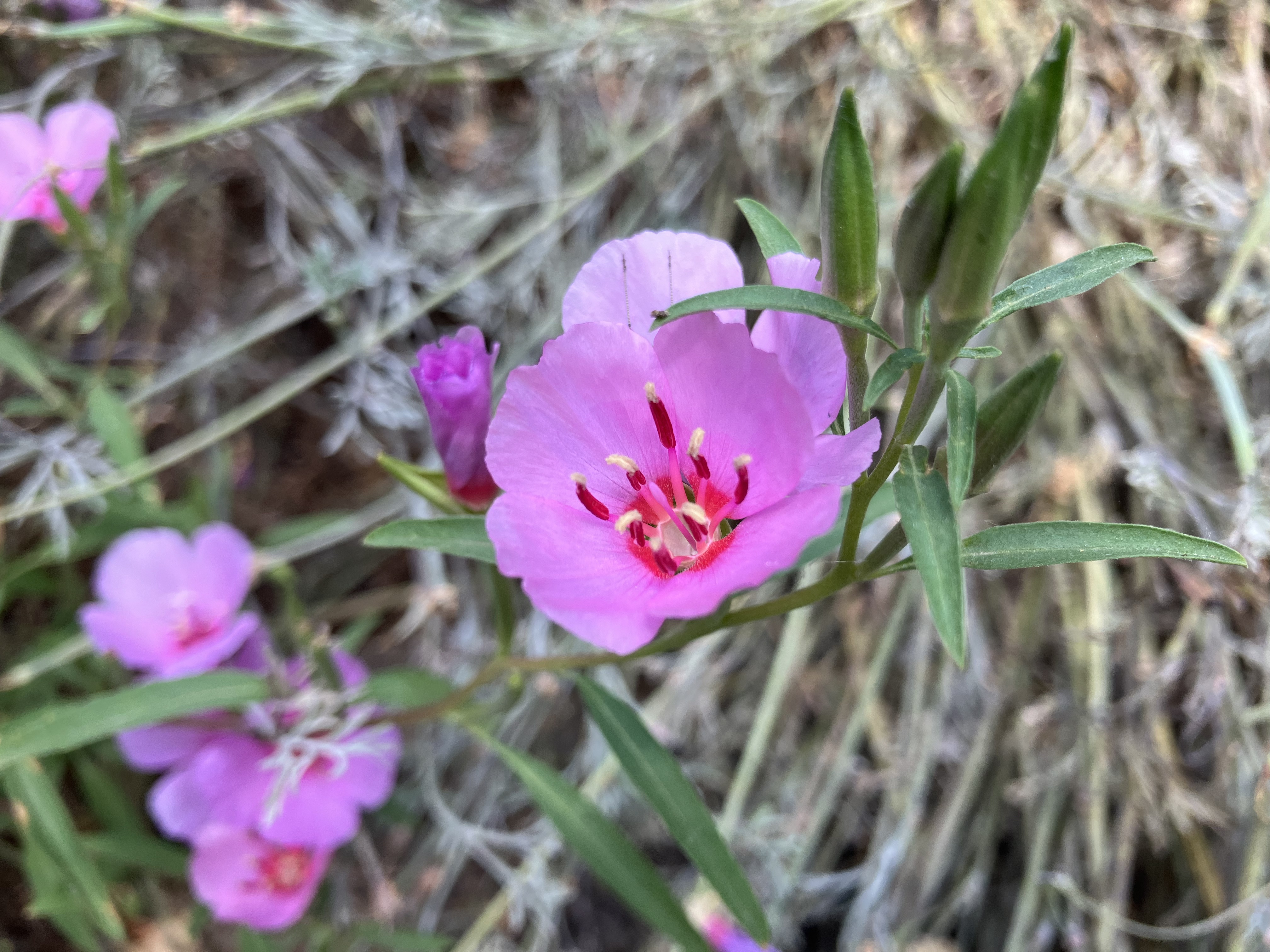
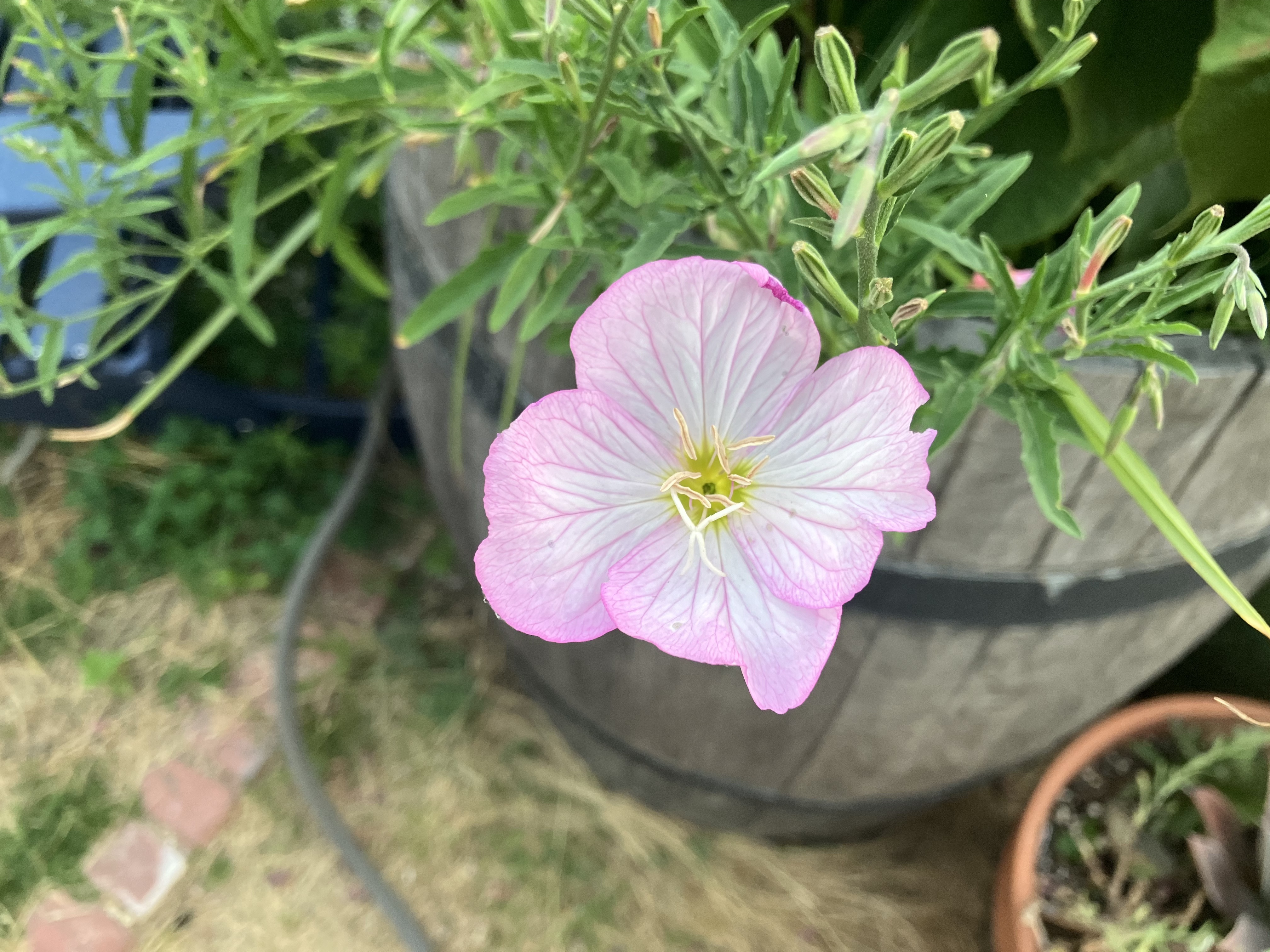
The last decade of drought has improved the availability of low-water plants and that should be celebrated. The next step is to increase adoption of native plants in the landscape. Native plants not only conserve natural resources (many survive the summer with no water at all!), but they also support native fauna.
The local CNPS chapter hosts two plant sales each year (October and April). However, a steadier supply of native plants would encourage increased use of native plants in the landscape. That is why The School Garden Doctor is preparing to launch a hyperlocal, micro-scale, teaching-forward native plant nursery in Napa County! Our effort will be called Dirt Girls Greenhouse and will endeavor to cultivate a love of native plants and share solidarity stories. We look forward to sharing our progress with you.
Do you harbor a love for a particular native plant? Let us know in the comments below.
P.S. Notice a discrepancy in the scientific information? I aim to be as accurate as possible, so please point it out.
Discover more from
Subscribe to get the latest posts sent to your email.


Ceanothus is my current favorite CA native plant. As for the naming, I am curious who these two people are/were: Julia Phelps and Ray Hartman who have ceanothus named for them.. I was told by an arborist that Ray Hartman was a Bay Area horticulturist, but I don’t know the full story of each of those names. I love the look of the plants in bloom when not a lot of other things are ready, so they are a great spot of color, and provide the food necessary for local life in early spiing.
LikeLike