
School gardens don’t just grow plants—they grow community, hands-on learning, and environmental stewardship. As the outreach project of The School Garden Doctor, Napa School Gardens grows community within our audience of educators who support hands-on-learning for environmental stewardship.
Willow Magnet School, 9/13/26
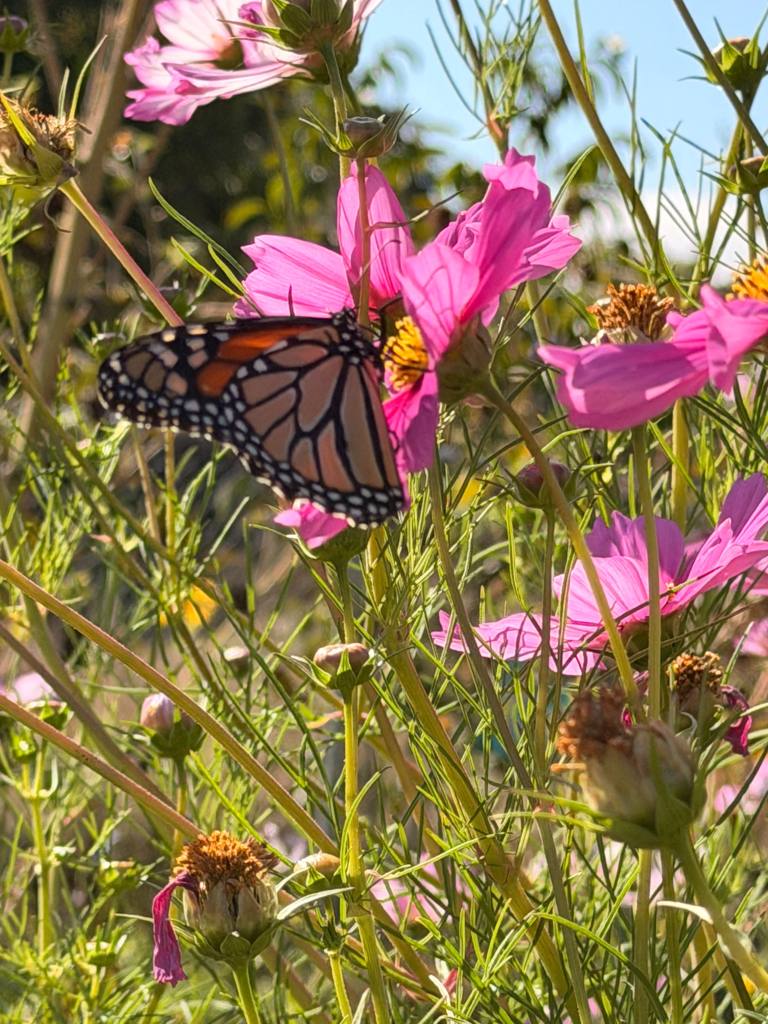
One community we’ve grown recently is our Monarch Sightings Share Space group in WhatsApp. A small but mighty collection of like-minded monarch ambassadors connected last fall when we realized that we needed a way to track activity at the gardens that we helped plant. So far, we have ten members. Out of the ten sites we’ve registered with Monarch Watch, nine reported sightings this fall!
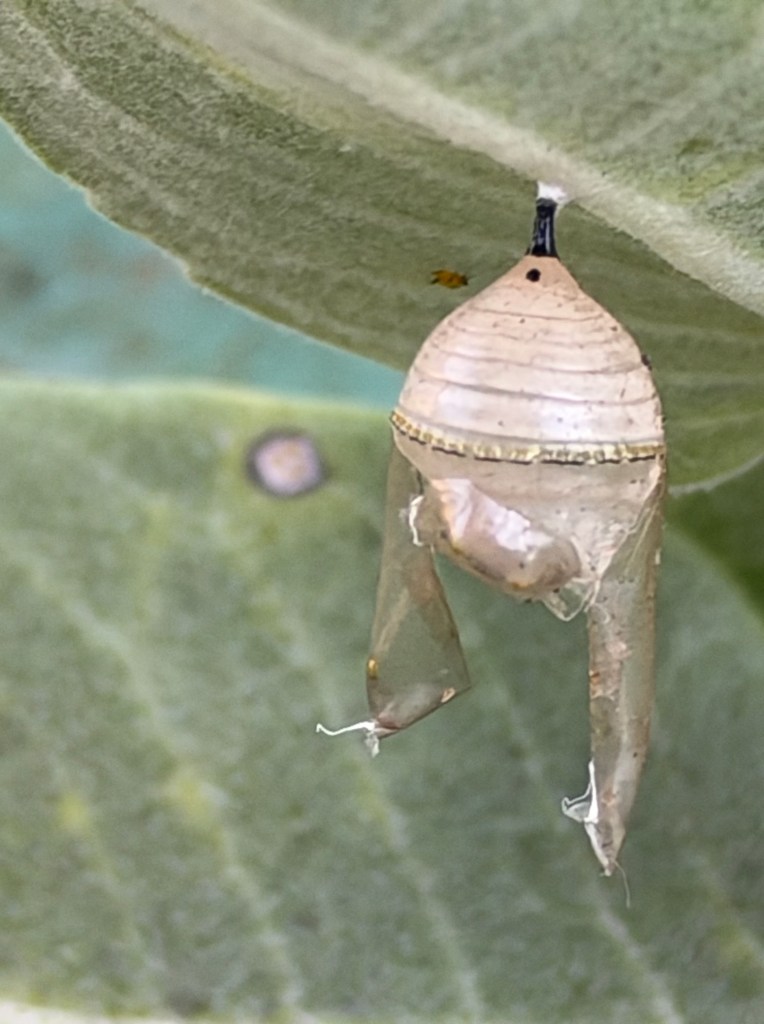
Each week this fall there has been a new post sharing the joy of butterfly visitors to the habitat spaces so lovingly tended in school gardens. Not all our partners choose to join the WhatApp, but they still share their excitement. The science teacher at Valley Oak shared via text message, “We finally have one!” Just a few days later, she found an empty chrysalis on campus. She’s gardening for monarchs at home, too, which was convenient because she let me re-home a caterpillar that had nothing else to eat in my yard.
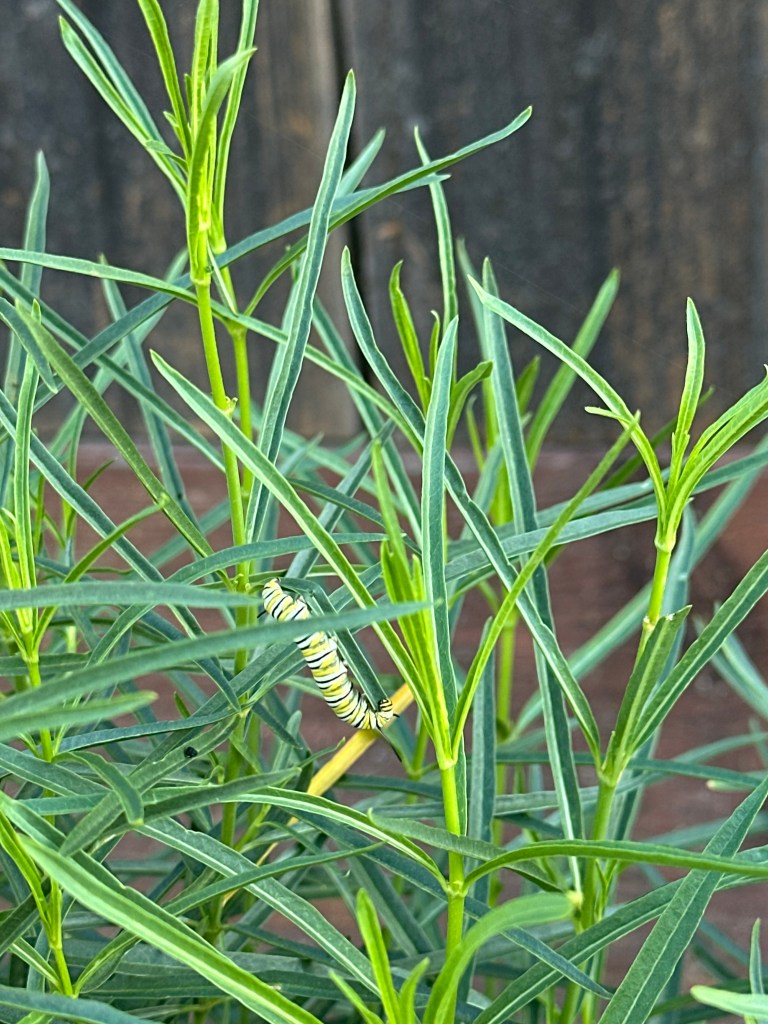
Translocation is not my preferred conservation strategy, but I ran out of milkweed for a few caterpillars who hitched a ride on milkweed plants purchased from an East Bay nursery (one reason it helps to shop local, if you can). One part of this project has been sharing with the public that it takes more than one milkweed plant to build habitat. Our planted sites follow the recommendations from the experts: at least 100 square feet, at least 10 milkweed plants (preferably two varieties), and a 2:1 ratio of nectar to milkweed plants.
Another challenge of this project has been figuring out how to source the right plants at the right time for school sites. Our kits contain 36 native plants: 12 milkweed and 24 flowering plants with a variety of bloom times. Plant availability doesn’t always meet some of timelines for schools, which has made it tough to meet some of our promised deadlines. Unforeseen circumstances–such as school sites being under construction for months to years!–have meant more time spent on strategizing and relying on partner organizations. Napa RCD and Napa Valley CNPS continue to be reliable collaborators.
We’re a small enough organization to be nimble. At one site, we waited to confirm our planting date until we had plants in hand. The after school garden club took the lead with planting, but multiple grade levels were involved in getting the job done. As a result, we recently added a few new members to our WhatsApp community.
Shearer Magnet School planted their Monarch Waystation on Thursday, November 5th.
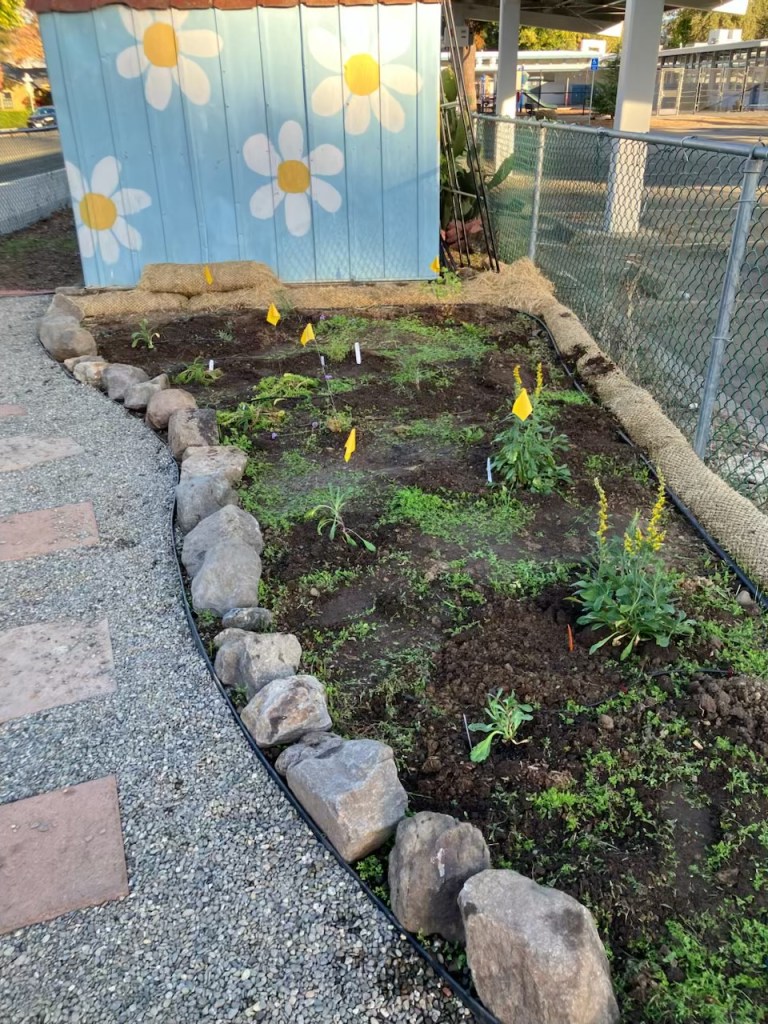
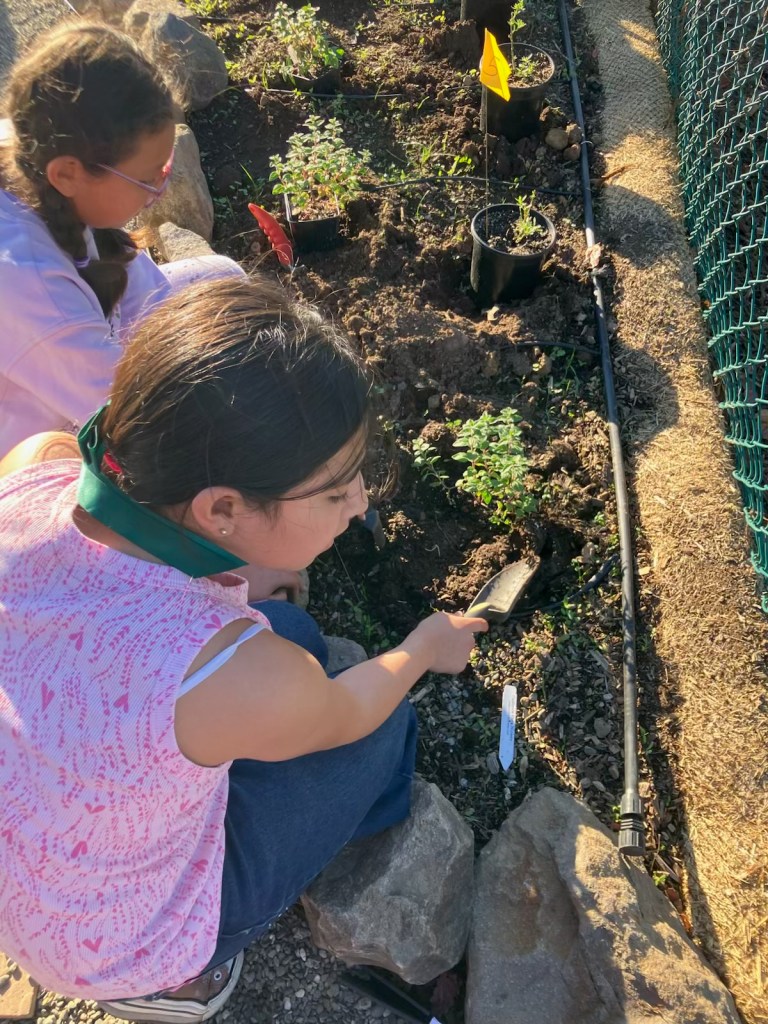
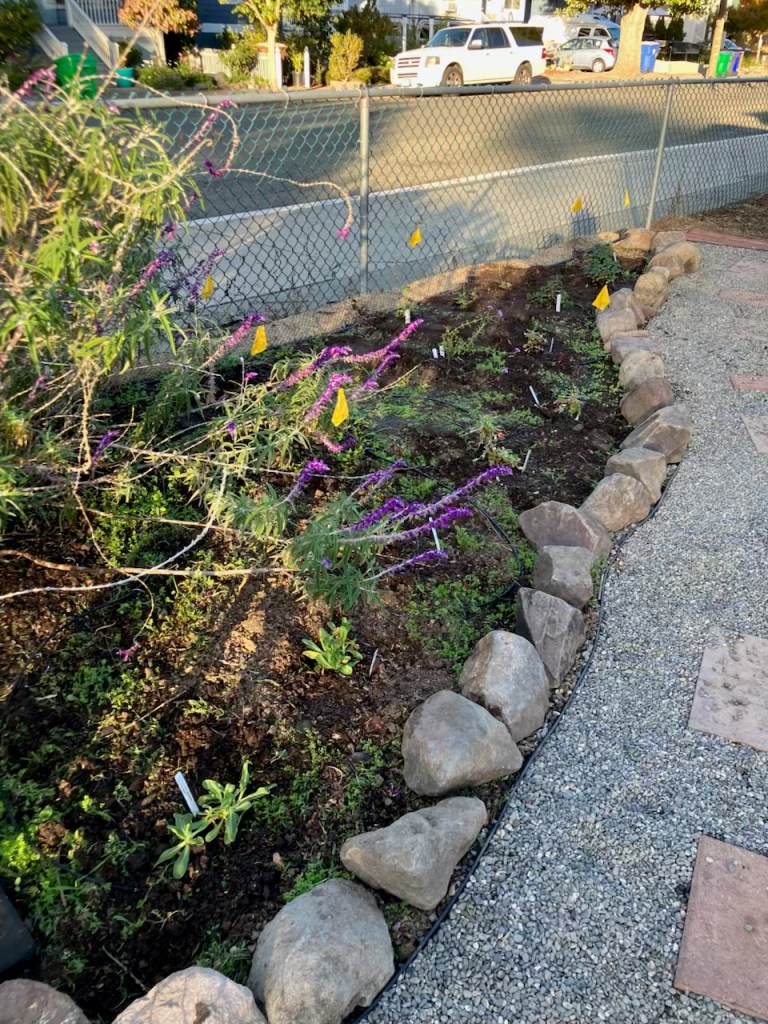
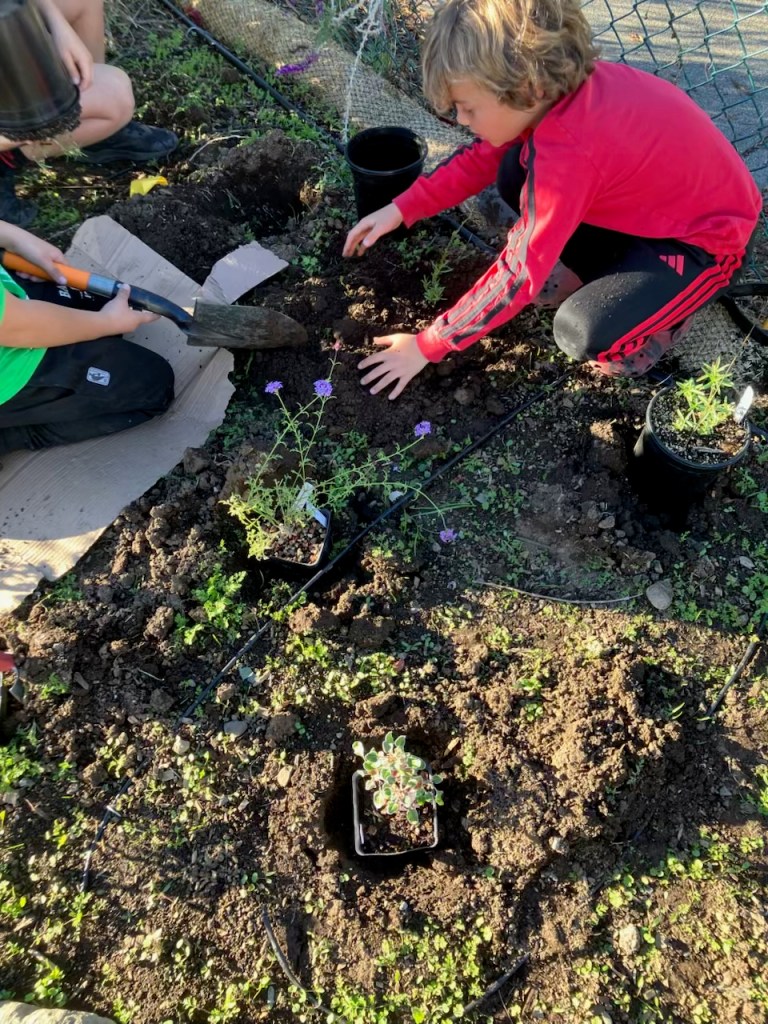
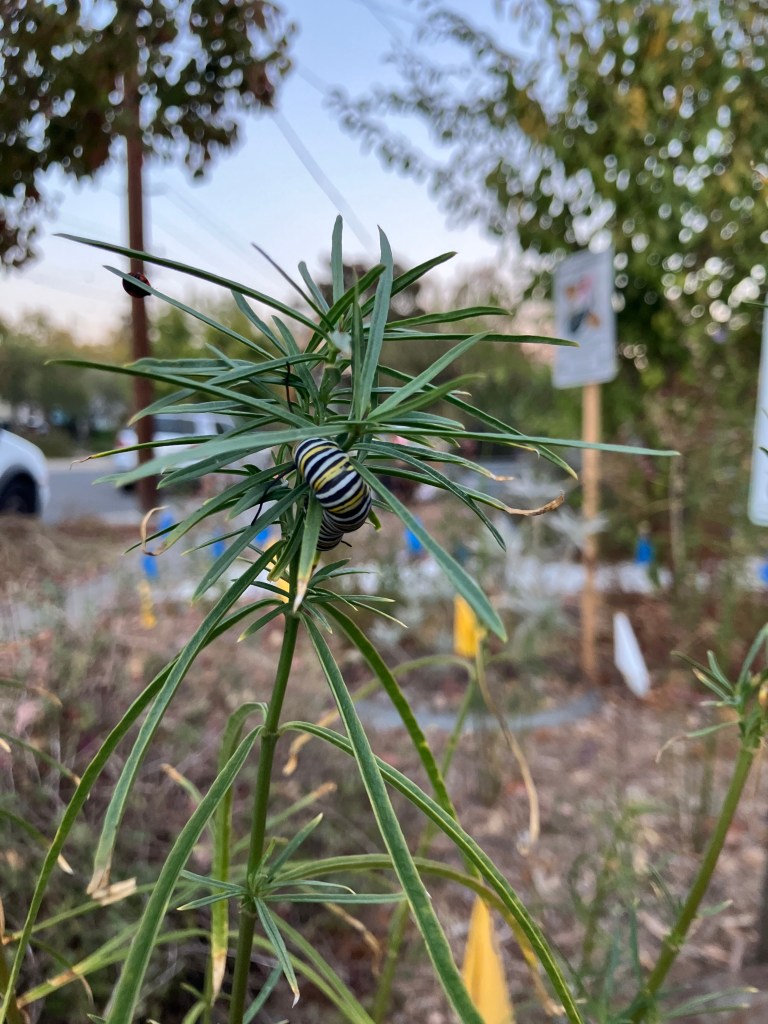
Moving ‘at the speed of trust’ builds lasting relationship and allows us to remember nature’s timelines, too. Perhaps the most important benefit of school gardens is the way they challenge us to slow down and pay attention. I’ve noticed in my own front yard that I can spot a small caterpillar from several feet away in low light. The directional contrast in the stipey pattern seem to magically catch my attention! These interactions not only provide a bright spot in the middle of a day, but also provide a much less mundane way of monitoring the efficacy of our project.
When we launched the Monarch Education Project, we had two primary aims: conservation and education. An unintended consequence of our grant initiative is growing a community of stewards who notice the non-human visitors to the garden. Often, it’s the kids who spy the caterpillars first. That’s a win!


So exciting to hear about the monarch sittings in 9 of 10 gardens! Truly providing support for the species. Bravo!
LikeLike